
History Co-Author Review – Can Claude or ChatGPT Write History Readers Actually Trust?

Quick Summary
- Product: History Co-Author
- Creator: Søren Jordansen (The Copy Viking)
- Launch Date: October 2, 2026 at 10:00 AM EST on WarriorPlus; launch pricing ends October 7 at 11:59 PM EST
- Front-End Price: $17 one-time (rising to at least $27 after launch week) 👉 Amazing Discounted Price Right Here! 📌
- Category: AI research-and-writing framework, plugins and training for narrative history books on Amazon KDP
- Requirements: A paid Claude or ChatGPT plan (about $20 a month) and a free KDP account
- Refund Policy: 14-day money-back guarantee, no questions asked
Narrative history is one of the biggest shelves in any bookstore, and one of the hardest to write for. You have to research like a historian and write like a novelist. AI has made the second part easier, but it has made the first part worse: ask a chatbot for a history chapter and you get invented quotes, shaky dates and prose that reads like an encyclopedia entry.
History Co-Author is built to fix both problems at once. It turns Claude or ChatGPT into a research partner that checks sources and a writing partner that tells the story with tension and real people. I used History Co-Author to research and publish a short narrative history book before launch. Here’s how the system works, what it got right, what I still had to check, and which upgrades are worth it.
What Is History Co-Author? How Does It Work Step By Step?
History Co-Author is a complete framework for writing narrative history with AI: three core files, two plugins that automate the workflow, and a 29-module written course. It works with either Claude or ChatGPT. The core idea is that the research comes first and gets written down: every source, quote and figure lives in a Research Bible the AI must follow while writing, and the book’s notes and bibliography are built from that same record at the end.
Here’s the workflow as I ran it:
➤ Step 1 — Load the system. Either drop the three files (Setup Prompt, Style Pack and Narrative History Framework) into a Claude or ChatGPT project, or install the free Narrative History Studio plugin for Claude Cowork or ChatGPT Work, which creates the folders and files for you.
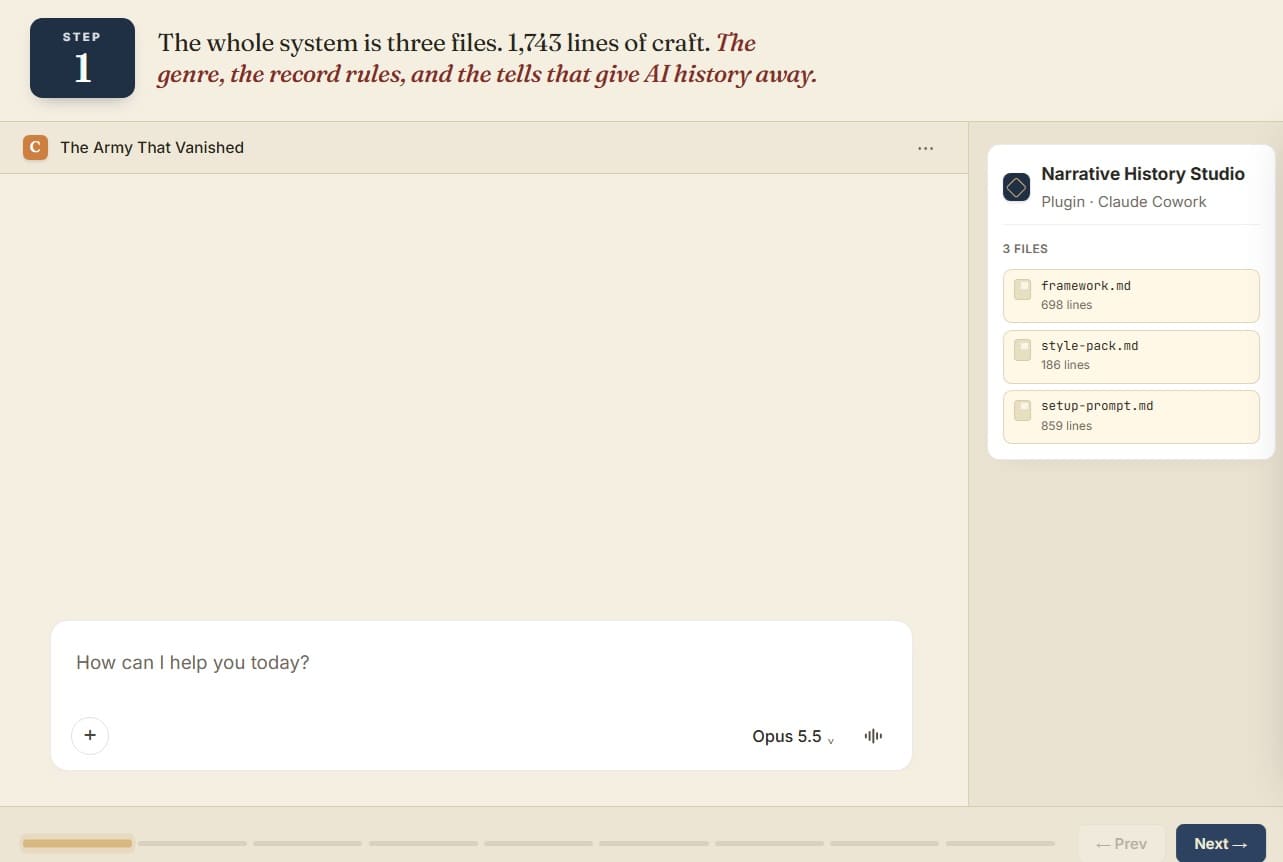
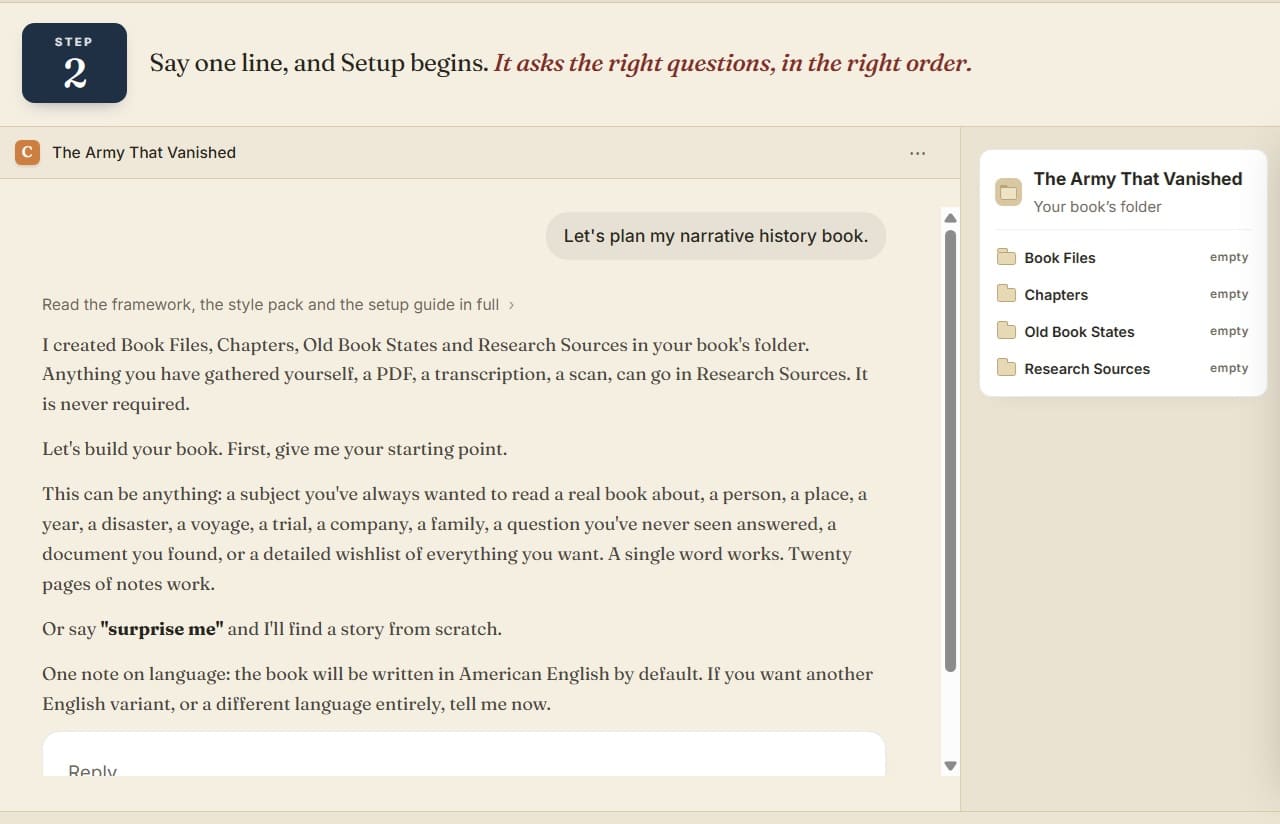
➤ Step 2 — Answer 18 planning questions. Setup offers options and recommendations at each step: the subject, the angle, the readership, the narrator voice (nine to choose from, or a blend of two), and the book’s shape. It pauses at three points to do research and asks your permission each time.
➤ Step 3 — Review five planning documents. You get a Book Bible, a Research Bible, a People, Places and Entities file, a Chapter Outline and a Book State file that tracks continuity.
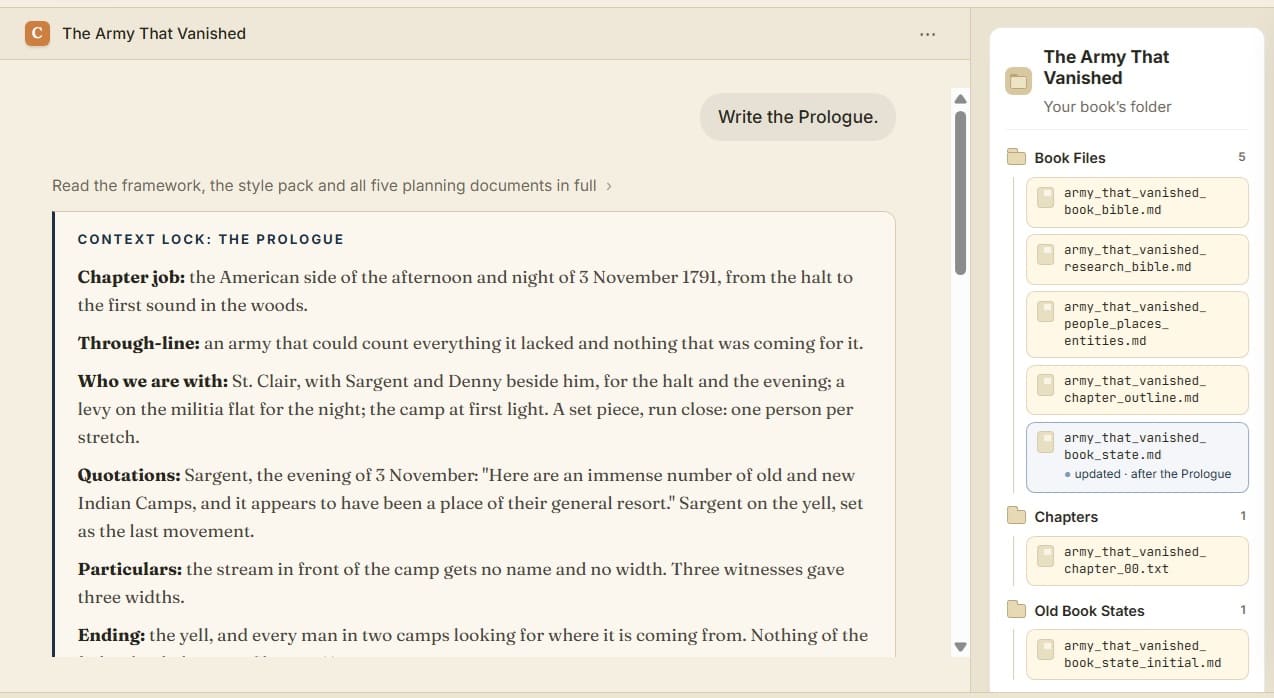
➤ Step 4 — Write chapter by chapter. Ask for the next chapter, read it, give notes, and continue. Quotes are copied word for word from the sources and checked again after each chapter.
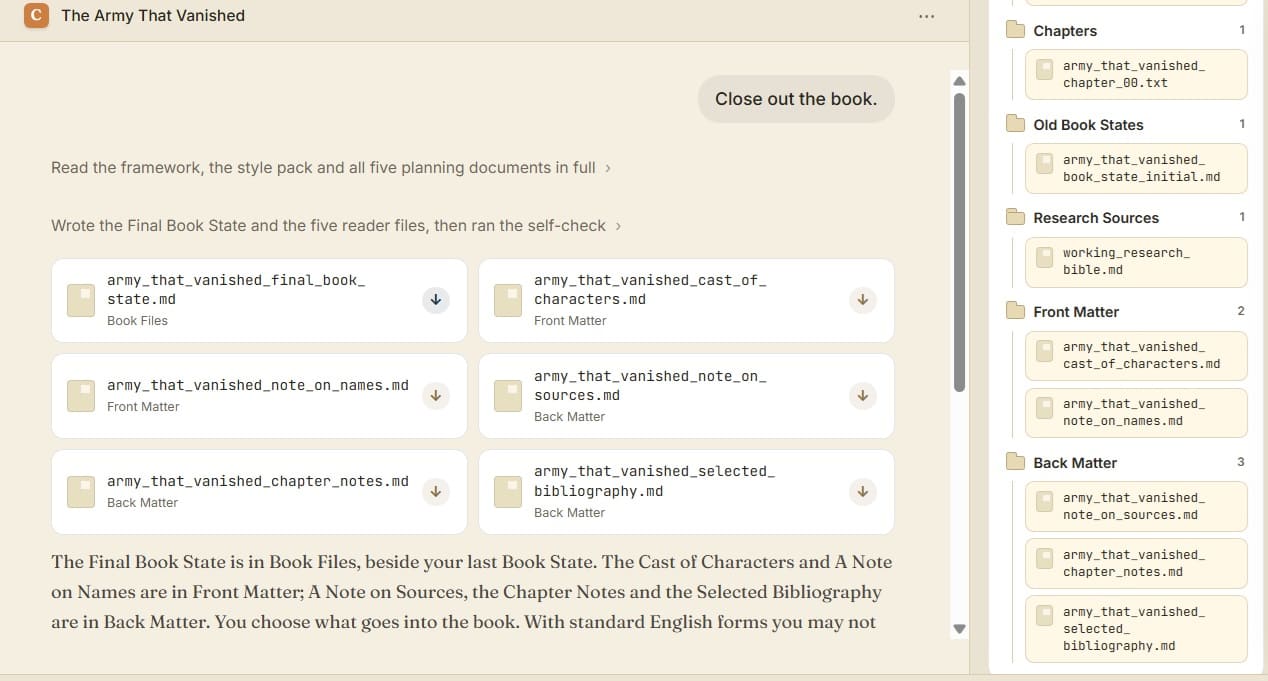
➤ Step 5 — Close out and publish. Say “close out the book” and it builds the cast of characters, a note on names and sources, chapter notes and a selected bibliography. Then you format, upload to KDP, and publish as ebook, paperback and hardcover.
About The Creator

History Co-Author is made by Søren Jordansen, who sells as The Copy Viking on WarriorPlus. His earlier launches in the same family are Cozy Co-Author and Steamy Co-Author, two fiction systems with an active member community, and this is his first nonfiction release.
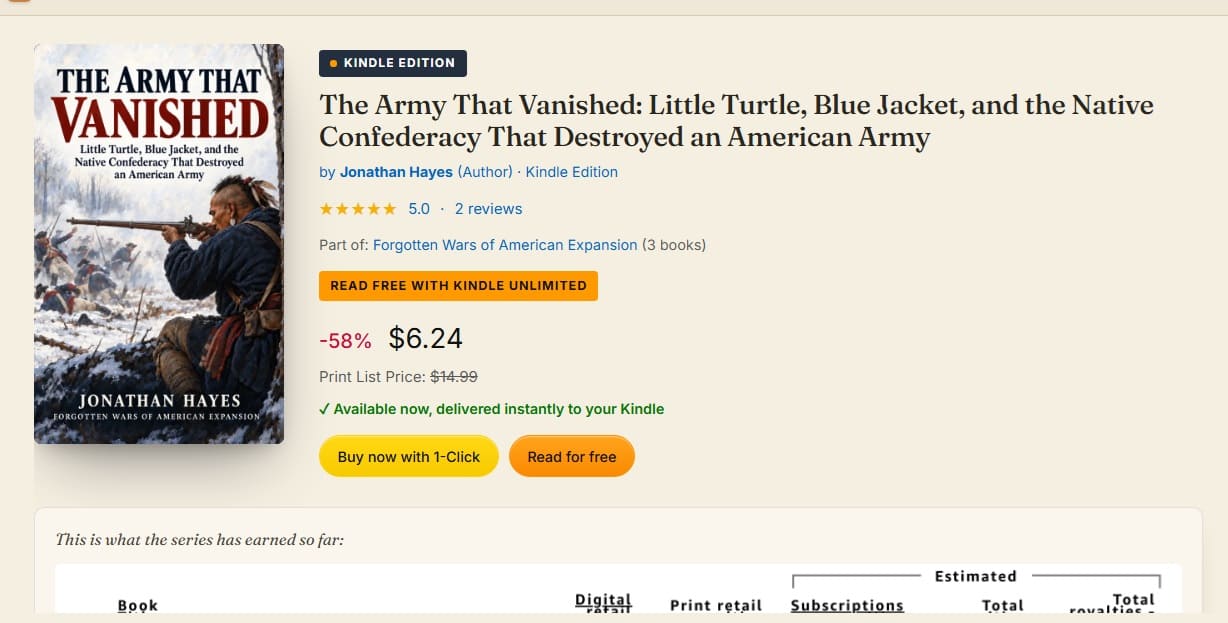
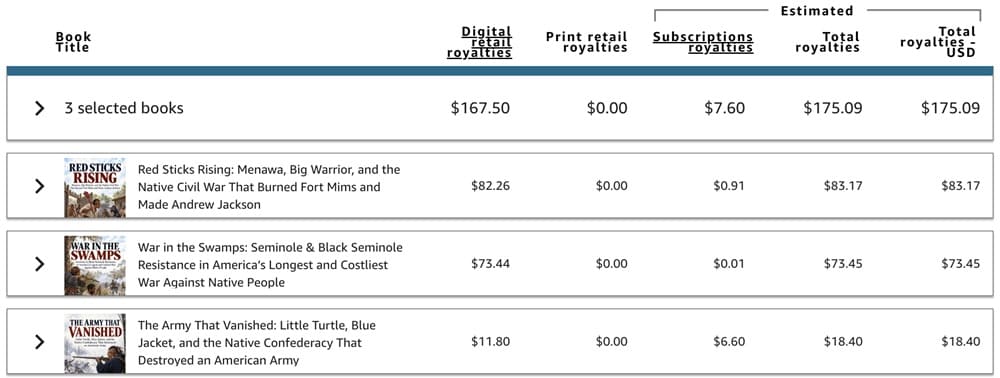
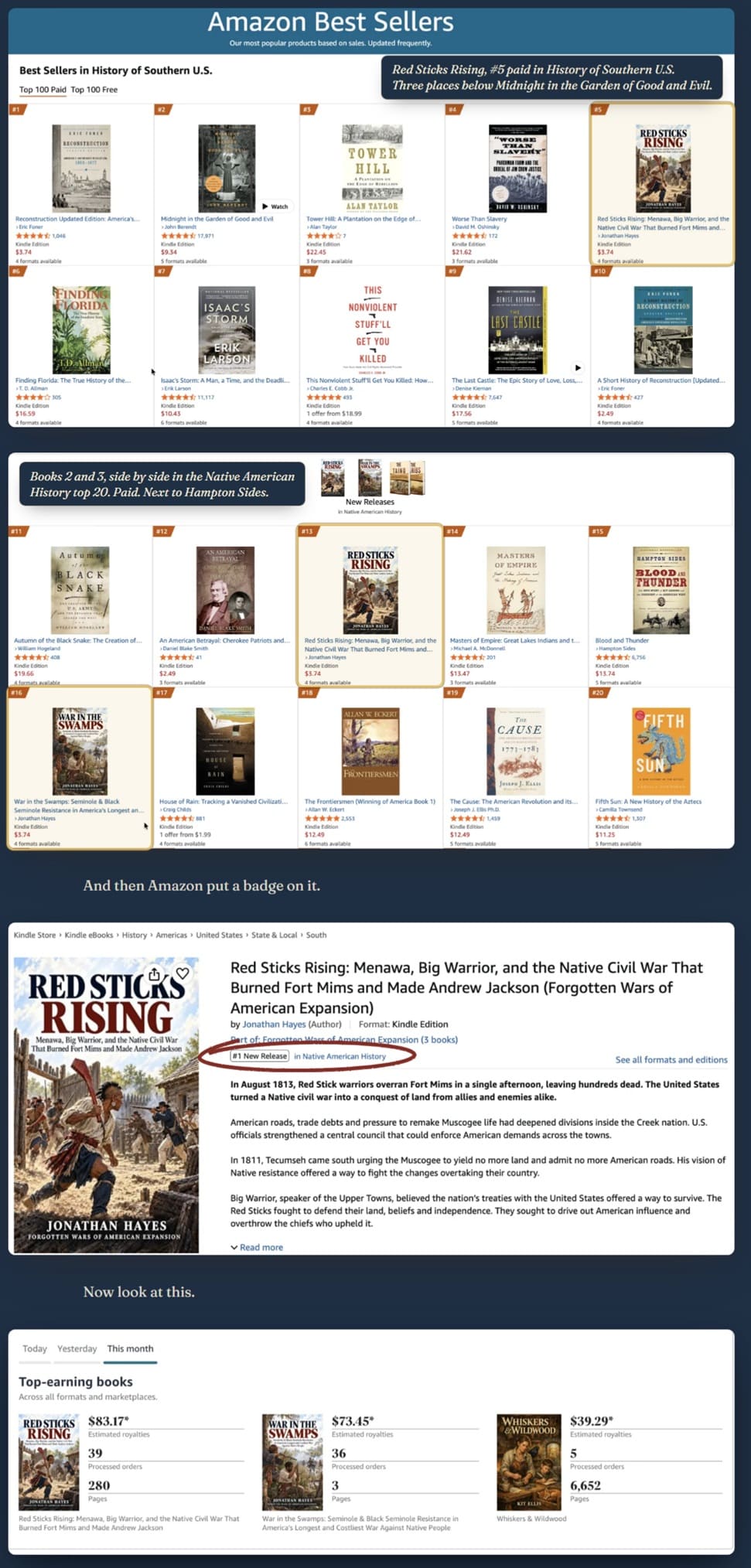
What gave me confidence is that he publishes with his own systems. He wrote a three-book series, Forgotten Wars of American Expansion, under the pen name Jonathan Hayes, and it’s on Amazon where anyone can read the samples. I read the first chapter of The Army That Vanished before buying, and it reads like a real narrative history, with notes at the back that say plainly where the evidence stops.
History Co-Author Review – Key Features
✅ Narrative History Framework: about 700 lines of genre rules covering pace, scale, narrator voice and the record rules that keep every quotation exact.
✅ Narrative History Style Pack: banned words and phrases, cliché bans and a self-check that strips out the patterns that make AI prose sound like AI.
✅ The Setup Prompt: an 18-step planning conversation with three built-in research moments.
✅ Narrative History Studio: two plugins, one for Claude Cowork and one for ChatGPT Work, that handle folders, setup, chapters and the closeout.
✅ Five working documents: Book Bible, Research Bible, People/Places/Entities, Chapter Outline and Book State.
✅ Source-based back matter: cast of characters, notes on names and sources, chapter notes and bibliography, built automatically.
✅ Nine narrator voices: with a sample before any chapter is written.
✅ 29-module course: from choosing a subject to covers, KDP setup, promotion and series building, with screenshot tutorials and videos.
✅ Free updates: improvements to the system are included at no extra cost.
Exclusive Vendor & Reader Bonuses
- 🎁 Narrative History Studio plugins: both the Claude Cowork and ChatGPT Work plugins are included free with the front end.
- 🎁 Three published books to study: the Forgotten Wars of American Expansion series, with free samples on Amazon, written with the same system you get.
- 🎁 Member community: discussion threads and FAQs built into every training module.
History Co-Author Pricing & Funnel Summary
History Co-Author Front End ($17)
The front end costs $17 one-time during launch week, which ends October 7. After that, the price rises to at least $27, though the product stays on sale. You get the three core files, both Studio plugins, the 29-module course with tutorials and videos, and future updates. There’s a 14-day money-back guarantee, no questions asked, and anything you write during those two weeks is yours to keep.
Is $17 worth it? For anyone who has wanted to write a history book and been stopped by the research, I’d say clearly yes. A history ghostwriter would charge thousands for a single book, and even a good editor charges more than this for one chapter. What you’re paying for is a tested process with strong guardrails, which is the part that’s hardest to build yourself. The real ongoing cost is the AI subscription: you need Claude or ChatGPT at about $20 a month. And you still need to read every chapter with care. History readers check facts, and no system removes that responsibility.
💡 Value-for-Money Rating: 9.8/10
For aspiring nonfiction authors and existing KDP publishers, this is an exceptional amount of tested method, tooling and training for the price, from a creator who publishes with his own system. It misses a perfect score only because you need a paid AI plan to use it, and because a careful fact-checking read of each chapter is still your job before anything goes on sale.
👉 Get History Co-Author At An Exclusively Discounted Price
The Upsells:
➡️ Order Bump — Ghostwriting License ($27): the right to use the whole system to write for others, such as selling ghostwriting services or branded books.
➡️ OTO 1 — History Genre Vault ($67): six more history-adjacent frameworks (Historical Biography, Battles and Campaigns, Narrative Prehistory and Archaeology, Ancient World, Christian History, and Young Readers History) with training.
➡️ OTO 2 — History Editor ($47): a framework and training that hand the manual editing pass to Claude or ChatGPT.
➡️ OTO 3 — Cover Creator ($67, or $97 with the A+ Author Toolkit): a kit for making ebook covers, and with the toolkit, A+ content for Amazon listings.
➡️ OTO 4 — Promo Stacker ($57): a guide with case studies on promoting books through book newsletter sites, list building and more.
➡️ OTO 5 — KDP Club ($14.99/month after a $1 trial, or $147/year): a KDP-focused community with weekly group sessions led by Søren.
My Personal Experience With History Co-Author
I got a review copy in mid-September and used it to start a series I’d been thinking about for years: “Forgotten Disasters of the Industrial Age”, short narrative histories of strange industrial accidents. For Book 1, I chose the Boston Molasses Flood of January 15, 1919, when a 50-foot steel tank on Commercial Street burst and sent a wave of about 2.3 million gallons of molasses through Boston’s North End, killing 21 people and injuring around 150.

I used the ChatGPT Work plugin. Setup took me just under two hours, including the three research pauses. I chose a measured, close-third narrator voice, and the research phase pulled from newspaper coverage of the time, the court-appointed auditor’s findings in the long lawsuit that followed, and modern books on the disaster. It flagged two popular “facts” as uncertain and kept them out of the main text.
The book became “The Wave on Commercial Street”, about 41,000 words.
Here’s the chapter outline the Setup produced, which I kept with small changes:
- Chapter 1 — A Warm Day in January: the sudden thaw that morning, after days of bitter cold, and the ordinary noon in the North End.
- Chapter 2 — The Tank: how the Purity Distilling tank was built in 1915, and the hurry behind it.
- Chapter 3 — Leaks Painted Brown: neighbors collecting dripping molasses, and the company’s response.
- Chapter 4 — 12:40 P.M.: the sound witnesses described, and the first seconds of the wave.
- Chapter 5 — The Elevated Railway: the wave striking the steel supports of the elevated line.
- Chapter 6 — The Rescuers: sailors, police and firefighters wading in, and the cold that set in by evening.
- Chapter 7 — The Names: the 21 people who died, told through the record of who they were.
- Chapter 8 — The Cleanup: weeks of salt water, sand and a harbor stained brown.
- Chapter 9 — Sabotage or Steel: the company’s anarchist-bomb defense, tested against the evidence.
- Chapter 10 — The Auditor: years of hearings, engineers and the 1925 finding against the company.
- Chapter 11 — What Changed: how the case pushed engineers toward stamped plans and inspections.
- Chapter 12 — Summer Smells: the neighborhood afterward, and what memory kept and lost.
Writing took four evenings. The chapters were genuinely good to read, especially Chapter 4, which builds the moment from witness accounts without inventing a single line of dialogue. My edits were mostly small: I trimmed a repeated description of the cold, and asked for one chapter to be rewritten with less focus on the engineering detail. I also checked every number in Chapters 2, 4 and 10 against two published books on the disaster myself and everything matched.
The closeout built the cast of characters, a note on sources and about nine pages of chapter notes. I made the cover with a free AI tool, following the course method, and published the ebook and paperback in Kindle Unlimited.
In its first ten days on Amazon, the book sold 22 copies and had around 3,800 Kindle Unlimited pages read, for approximately $76 in royalties. Not much yet, but it’s one book in a series, and Book 2 is already in planning.
Comparison Table: History Co-Author vs. Alternatives
| Option | Cost | Source Checking | Prose Quality | Beginner Friendly |
|---|---|---|---|---|
| History Co-Author | $17 + AI plan | Built in, with notes | Narrative, controlled | Yes, with 29 modules |
| Plain ChatGPT or Claude prompts | $20/month | Writes from memory | Encyclopedic and hedging | Yes |
| Generic AI book prompt packs | Varies | Rarely | Inconsistent | Mostly |
| Hiring a history ghostwriter | Thousands per book | Depends on the writer | Can be excellent | Slow and costly |
Final Verdict on History Co-Author
History Co-Author is the first AI writing system I’ve used that treats history the way history readers do: sources first, story second, and honesty about where the record ends. My molasses-flood book was researched, written and published in under two weeks, and I didn’t find a single invented quote in it. It won’t do the final read for you, and you’ll need an AI subscription. For anyone who wants to write narrative history for KDP, I think History Co-Author is a worthwhile investment at the $17 launch price, especially before it rises after October 7.
That’s all what I want to share with you about History Co-Author. I hope that my review can give you a helping hand in deciding what is best for you.
You can receive exclusive bonus materials by completing the two steps below:
♦ Step 1: Order the product by clicking the button below.

♦ Step 2: After your purchase is complete, email your receipt to me at ethanbonus1992@gmail.com so I can confirm your purchase and send you instructions on how to access your bonus materials.