
Quick Summary
- Product: Logic Rails (Train Track Puzzle Generator & Book Builder)
- Creator: Ken Bluttman
- Launch Date: October 11, 2026 at 10:00 AM Eastern (via WarriorPlus), closes October 15 at 11:59 PM Eastern
- Front-End Price: $27 one-time 👉 Amazing Discounted Price Right Here! 📌
- Category: Browser-based generator for Train Track logic puzzles and puzzle books
- Requirements: A computer with an internet connection. No API key, tokens or design software needed
- Refund Policy: 30-day money-back guarantee
If you’ve browsed the puzzle book shelves on Amazon lately, you’ve seen the problem. Sudoku, word search and maze books are everywhere, and many of them look almost identical. New publishers end up fighting for the same keywords with the same kind of book. That’s why a fresh puzzle format caught my attention, and Logic Rails is built around exactly that idea.
Logic Rails generates Train Track puzzles, a deduction puzzle where the solver uses row and column numbers to work out a hidden railway route across a grid. I had early access before the October 11 launch and used it to build a complete 60-puzzle book. In this review I’ll walk you through how it works, what the two upgrades add, what it costs, and how my first Train Track book turned out.
What Is Logic Rails? How Does It Work Step By Step?
Logic Rails is a browser-based Train Track puzzle generator and book builder for self-publishers. It creates Open Route and Closed Loop logic puzzles in grid sizes from 6×6 up to 15×15, adds the row and column clues automatically, and exports each puzzle with its matching solution as clean, print-ready track graphics. You can produce up to 100 unique puzzles in one run and turn them into puzzle books, activity books, printable packs, classroom worksheets or lead magnets, with full commercial rights to everything you create.
The format itself is easy to explain to buyers. Each puzzle shows a grid with a few track pieces already in place and a number beside every row and column. The numbers tell the solver how many squares in that line hold track, and the goal is to draw the one continuous route that fits every clue. It feels familiar to anyone who enjoys Sudoku or nonograms, yet it looks completely different on the page because the solution is drawn as a real railway with rails and ties.

Here’s how I went from an empty screen to a finished set of puzzles:
➤ Step 1 — Choose your puzzle style. Pick Open Route, where the track enters and leaves the grid at the edges, or Closed Loop, where the route forms one complete circuit. Open Route works well for beginners, while Closed Loop gives experienced solvers a little more to think about.
➤ Step 2 — Set the grid, trim size and difficulty. Choose a grid of 6×6, 7×7, 8×8, 10×10, 12×12 or 15×15, then match it to a 6×9, 8×10 or 8.5×11 book trim. The difficulty and clue controls decide how many starter track pieces stay visible, which is how you shape an easy warm-up page or a tough finale.
➤ Step 3 — Generate a batch. Tell the tool how many puzzles you want, up to 100 at a time, and it builds a unique route for each one, counts every row and column, and places the clue numbers for you. Each puzzle is different, so you aren’t publishing the same grids as other buyers.
➤ Step 4 — Export the puzzles and the solutions. Download each puzzle and its full matching solution as separate scalable SVG files, ready for your book interior, a printable pack or any design program. The track graphics stay crisp at any size, so they print cleanly on KDP paperbacks and look sharp in digital downloads.

About The Creator

Logic Rails is created by Ken Bluttman, a web developer, author and seven-figure product creator who has sold more than $1.5 million worth of digital products. He runs his publishing tools under the Innovative Digital Publishing banner, and he brings more than 20 years of software development and corporate training to every launch, from work with single-person businesses to leading development teams on 8- and 9-figure projects.
Ken is one of the most consistent names on WarriorPlus. He is a Top 5% Vendor, a Top 1% Affiliate and a 13-time Deal Of The Day winner, with dozens of successful launches behind him. Many puzzle publishers already know his work, and his trainings such as Micro Apps Mastery and App Launch Lab have helped thousands of people earn online through Amazon KDP, Etsy, YouTube and web apps.
Logic Rails Review – Key Features
✅ Automatic Train Track Puzzle Generator: The core of the tool builds complete Train Track puzzles for you, including a valid hidden route, the row and column clues and the starter pieces. You skip the slow part of puzzle making, which is designing a route by hand and then counting every line, and go straight to a finished puzzle you can place in a book.
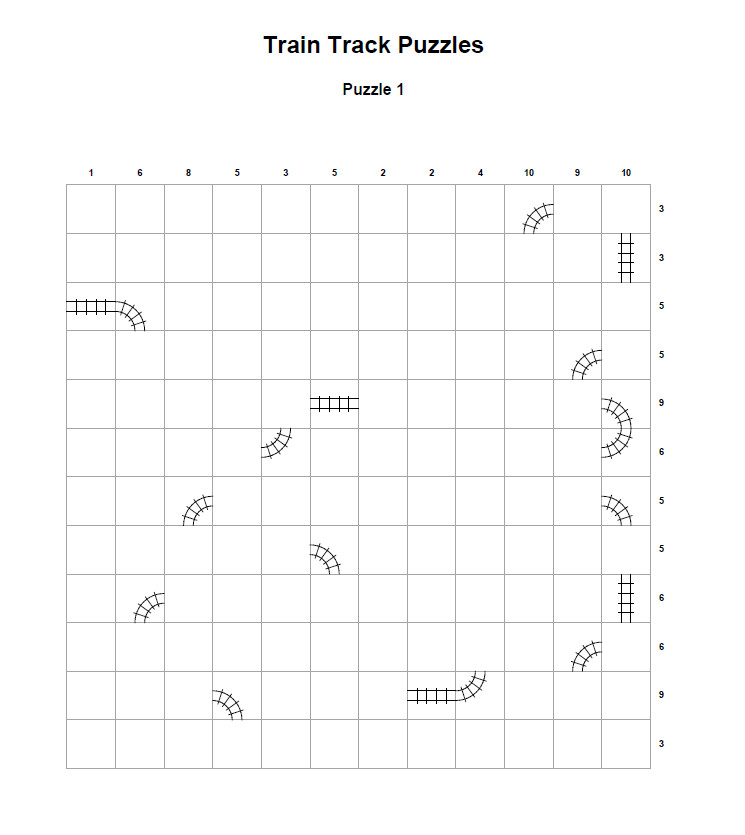
✅ Open Route And Closed Loop Modes: Two puzzle styles in one tool give your books natural variety. Open Route puzzles have a track that starts and ends at the edge of the grid, while Closed Loop puzzles form one unbroken circuit. Mixing both inside one book keeps solvers interested and lets you sell two clearly different volumes in the same niche.
✅ Six Grid Sizes From 6×6 To 15×15: Small 6×6 and 7×7 grids suit beginners, older kids and quick warm-ups, while 12×12 and 15×15 grids give puzzle fans a proper challenge. With this range you can build a single book that grows harder from page to page, or a whole series aimed at different skill levels.

✅ Book Trim Sizes Built In: The tool supports the three trim sizes puzzle publishers use most: 6×9, 8×10 and 8.5×11 inches. Picking the trim before you generate means the puzzles are sized for your interior from the start, so you don’t have to resize every grid later to fit a KDP paperback.
✅ Automatic Row And Column Clues: Every clue number is calculated from the finished route and stays fixed to it. That removes the most error-prone job in puzzle making. A single wrong count can make a puzzle impossible to solve, and here the numbers always match the solution, so readers get fair puzzles every time.
✅ Batch Generation Of Up To 100 Puzzles: You can create up to 100 unique puzzles in one run, which is enough for a full book or several printable packs in minutes. Because every puzzle is unique, your book doesn’t share the same grids as other customers, which helps your listings stand on their own.
✅ Difficulty And Clue Controls: You decide how much help the solver gets by choosing how many starter track pieces stay visible. More pieces make a gentle puzzle for beginners, fewer pieces make a harder one. It’s an easy way to build a smooth difficulty curve or to label sections as Easy, Medium and Hard.
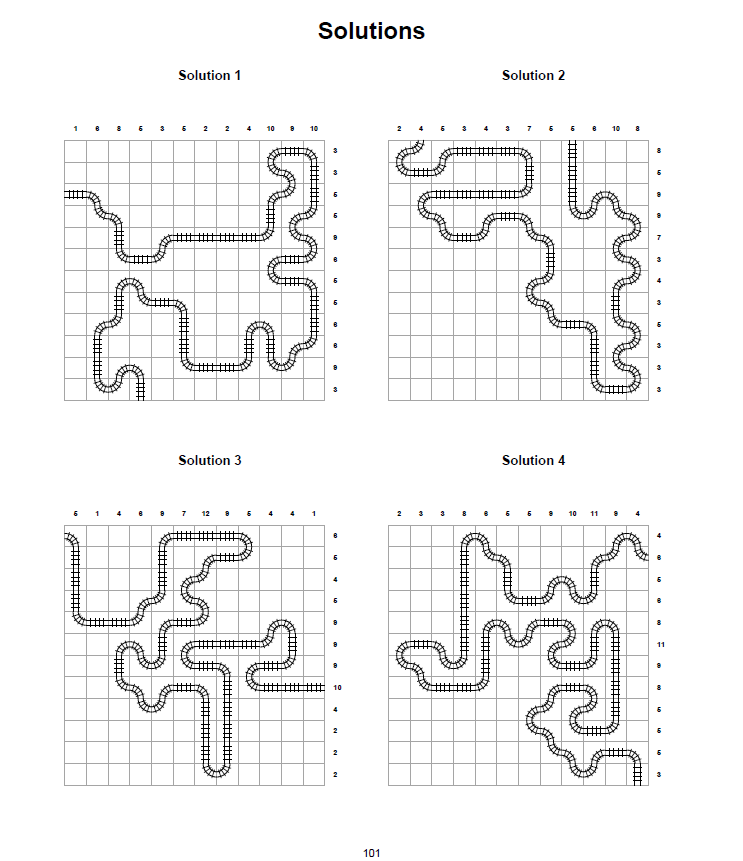
✅ Real Railway-Style SVG Graphics: The track pieces are drawn as real railway sections with parallel rails, railroad ties, straight runs and curved corners. They’re exported as scalable SVG files, so they stay crisp at any size, place easily in Canva, Affinity or Illustrator, and print without the blurry edges you get from low-resolution images.
✅ Matching Solution Files: Every puzzle comes with its full solution as a separate file, ready for the answer section at the back of your book. Because the solution is the exact route the clues were built from, your answer key always lines up with the puzzle pages.
✅ Full Commercial Rights, No API Or Tokens: Everything you generate is yours to use commercially in books, printables, print-on-demand products and more. The tool runs in your browser with no API key, no token costs and no special software, so there’s nothing extra to pay each time you make a new batch.
DEMO VIDEO
Logic Rails Pricing & Funnel Summary
Logic Rails Front End ($27)
The front end costs $27 one-time on WarriorPlus, with no monthly fee, during the launch that runs from October 11 to October 15. It gives you the full automatic generator: Open Route and Closed Loop modes, all six grid sizes up to 15×15, the three trim sizes, difficulty and clue controls, automatic clues, batches of up to 100 puzzles, and puzzle plus solution exports. The purchase is covered by a 30-day money-back guarantee, so you can build a full book before you decide.
Is it worth it? I’d compare it with the two ways most publishers make puzzle books today. Building Train Track puzzles by hand means designing a route, counting every row and column, and redrawing the tracks for the solution, which can take 20 minutes or more per puzzle. Buying ready-made puzzle packs is faster, but other publishers can buy the same pages. For $27, you get unlimited unique puzzles in a format that’s still uncommon on Amazon, with no running costs. One small thing worth knowing: the generator creates the puzzles for you, so if you’d also like to hand-design every route yourself or go up to 24×24 grids, the Designer upgrade adds that nicely.
💡 Value-for-Money Rating: 9.5/10
For KDP puzzle publishers and printable sellers who want a fresh format, this is an easy decision: a reliable generator, unique puzzles and print-ready graphics for one small payment.
👉 Get Logic Rails At An Exclusively Discounted Price 📌
The Upsells:
➡️ OTO 1 — Logic Rails Designer ($37): The Designer is a visual builder for creating completely custom Train Track puzzles by hand. You place every straight and curved track piece yourself, move, rotate, swap or delete pieces, and watch the row and column counts update live. When the route looks right, you lock the solution, click pieces to choose which starter clues stay visible, and export the puzzle and solution. Grids go all the way from 6×6 to 24×24, so it’s ideal for creators who want signature puzzles, themed shapes or extra-large challenge grids.
➡️ OTO 2 — Logic Rails Publishing Suite ($47): The Publishing Suite adds three more outstanding logic puzzle types to your toolkit: Hashi (also called Bridges), Binary (also called Takuzu) and Shikaku (also called Rectangles). Each is a well-loved deduction format, so you can build mixed logic puzzle books, bonus sections or separate series alongside your Train Track titles. It’s a great fit for publishers who want a wider catalog and variety books that keep solvers coming back.
Why Should You Choose Logic Rails?
My Personal Experience With Logic Rails
I already publish a small line of logic puzzle books, mostly Sudoku and nonograms for adults, and I wanted something that wouldn’t compete with the hundreds of near-identical titles in those categories. With early access to Logic Rails, I built a 60-puzzle paperback called “Rail Riddles: 60 Train Track Logic Puzzles for Curious Minds”, aimed at adults and teens who like a calm, steady challenge. I chose the 8.5×11 trim so the larger grids would have room to breathe, and I planned the book as a journey that starts with short local lines and ends with a big central station.
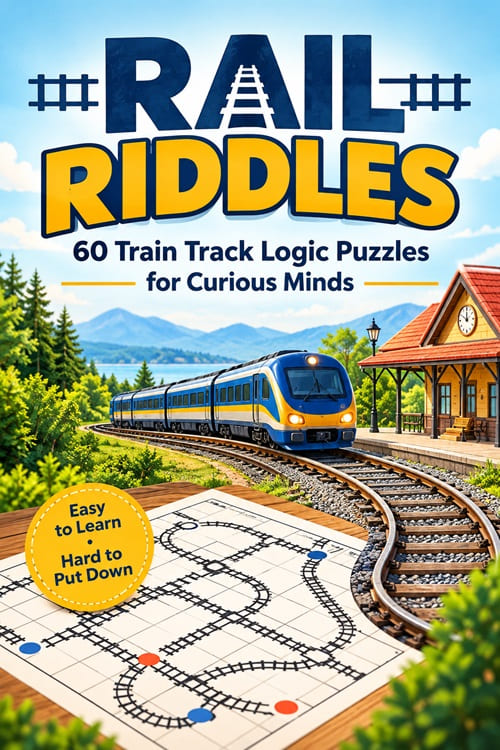
Here’s how I structured “Rail Riddles”:
- Section 1 — Warm-Up Junction: 10 Open Route puzzles on 6×6 grids with plenty of starter pieces, so new solvers learn the rules in a few minutes.
- Section 2 — Branch Lines: 15 Open Route puzzles on 7×7 and 8×8 grids, with fewer starter pieces as the section goes on.
- Section 3 — Loop Yard: 15 Closed Loop puzzles on 8×8 grids, introducing the idea of one complete circuit.
- Section 4 — Express Routes: 12 mixed puzzles on 10×10 grids, alternating Open Route and Closed Loop to keep solvers alert.
- Section 5 — Grand Central: 8 finale puzzles on 12×12 and 15×15 grids with only a handful of starter pieces.
- Front matter: a title page, a copyright page and a one-page “How to play” guide with a worked 6×6 example.
- Back matter: all 60 solutions, four to a page, followed by a short note inviting readers to look for the next volume.
Generating the puzzles took far less time than I expected. I ran one batch per section, about five minutes each, and every puzzle came back with correct clues and a matching solution. I spent most of my time on layout: placing the SVG files into my Affinity Publisher template, adding page numbers and section headers, and laying out the solution pages. That took about three hours across two evenings, which is normal for any puzzle book interior. I also solved a dozen puzzles myself as a check, and each one had a single clean route.
The one thing I adjusted was the “How to play” page. Train Track puzzles are new to many readers, so I rewrote my first draft twice until the rules fit in four short sentences next to a simple worked example. That small step made the whole book feel friendly, and I’ll reuse the same page in every future volume.
I uploaded “Rail Riddles” to KDP at $8.99 with a bright cover showing a looping railway, and it went live two days later. In its first eight days, it sold 34 copies and earned approximately $92 in royalties, with almost no advertising. While those numbers aren’t life-changing, they came from a single book in a quiet corner of the puzzle market, and I’m already generating the puzzles for a Closed Loop-only second volume.
Common Questions About Logic Rails
- What type of computer do I need?
Any computer with an internet connection. It runs in your browser as a cloud-based member site, with nothing to install. - Does it come with commercial rights?
Yes. Every puzzle you generate is yours to use commercially in books, printables and print-on-demand products. The personal-use wording only refers to the software and training videos. - Are the puzzles suitable for kids?
They’re a good fit for older kids and adults. The smaller 6×6 grids with more starter pieces make a gentle introduction. - Where can I sell the puzzle books?
Amazon KDP is the main market, and you can also sell on Etsy, Teachers Pay Teachers and other marketplaces. - Will everyone end up with the same puzzles?
No. Every puzzle is generated uniquely, so your books don’t share the same grids as other buyers. - Do I need an API key or tokens?
No. There’s no API key, no token cost and no extra software, so each new batch costs nothing extra.
Comparison Table: Logic Rails vs. Alternatives
| Option | Cost | Fresh Puzzle Format | Unique Puzzles | Time Per Book |
|---|---|---|---|---|
| Logic Rails | $27 one-time | Yes, Train Track | Yes | Minutes to generate |
| Building puzzles by hand | Free, but slow | Yes | Yes | Many hours |
| Ready-made puzzle packs | $10–$50 per pack | Usually classic formats | Shared with other buyers | Fast |
| Sudoku and word search generators | Varies | No, crowded niches | Yes | Fast |
Pros and Cons of Logic Rails
- ✅ A fresh puzzle format that stands apart from crowded Sudoku and word search books.
- ✅ Generates up to 100 unique puzzles at once, with correct clues and matching solutions.
- ✅ Crisp railway-style SVG graphics that print cleanly at any size.
- ✅ Six grid sizes, three trim sizes and two puzzle modes for easy book variety.
- ✅ No API key, tokens or subscription, plus full commercial rights to your puzzles.
- ⚠️ The format is new to many readers, so a one-page “How to play” guide at the front of each book helps them settle in quickly.
- ⚠️ The puzzles come out as SVG files you place in your own book template; once that template is set up, every new volume goes together fast.
Final Verdict on Logic Rails
Logic Rails is one of the smartest puzzle tools I’ve tried this year, because it gives publishers something genuinely different to sell. For $27 one-time, you get a reliable Train Track generator, unique puzzles with correct clues, matching solutions and print-ready graphics, all with no running costs. Most publishers will be well served by the front end alone; if you love designing your own routes, adding the Designer is the smooth next step, and the Publishing Suite is a natural fit for anyone planning mixed logic puzzle books. In my opinion, Logic Rails is worth considering, especially while the launch price is still available and the format is still fresh.
That’s all what I want to share with you about Logic Rails. I hope that my review can give you a helping hand in deciding what is best for you.
You can receive exclusive bonus materials by completing the two steps below:
♦ Step 1: Order the product by clicking the button below.

♦ Step 2: After your purchase is complete, email your receipt to me at ethanbonus1992@gmail.com so I can confirm your purchase and send you instructions on how to access your bonus materials.