
Jikan Nazo Review
Honest Look Before You Buy!
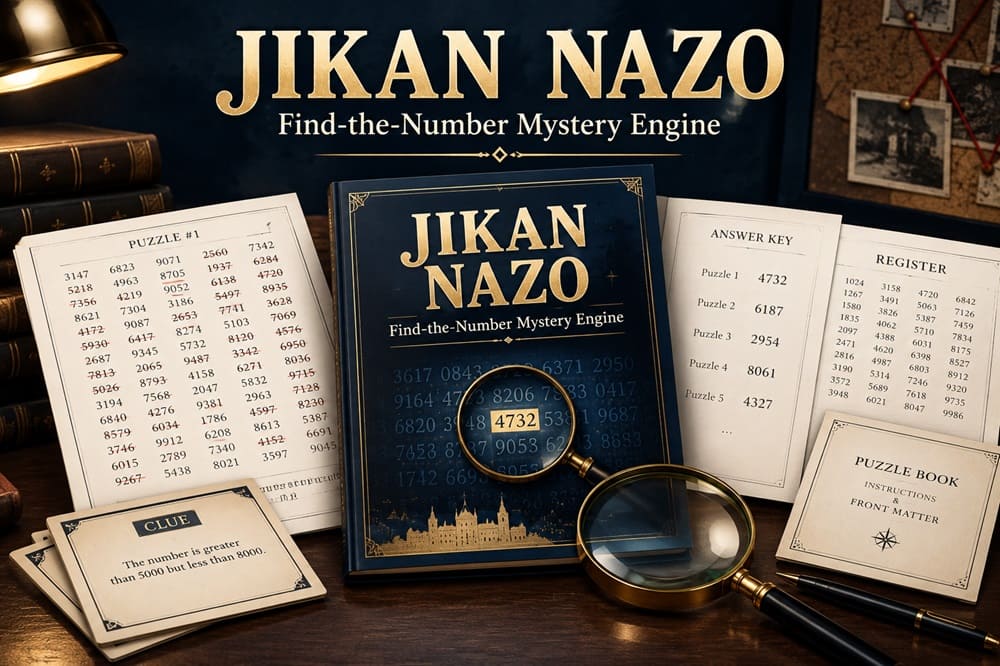
Quick Summary
- Product: Jikan Nazo — Find-The-Number elimination mystery engine for Amazon KDP and printables
- Creators: Ike Paz, Luke Bowes and Marina Matic (Royalty Prints)
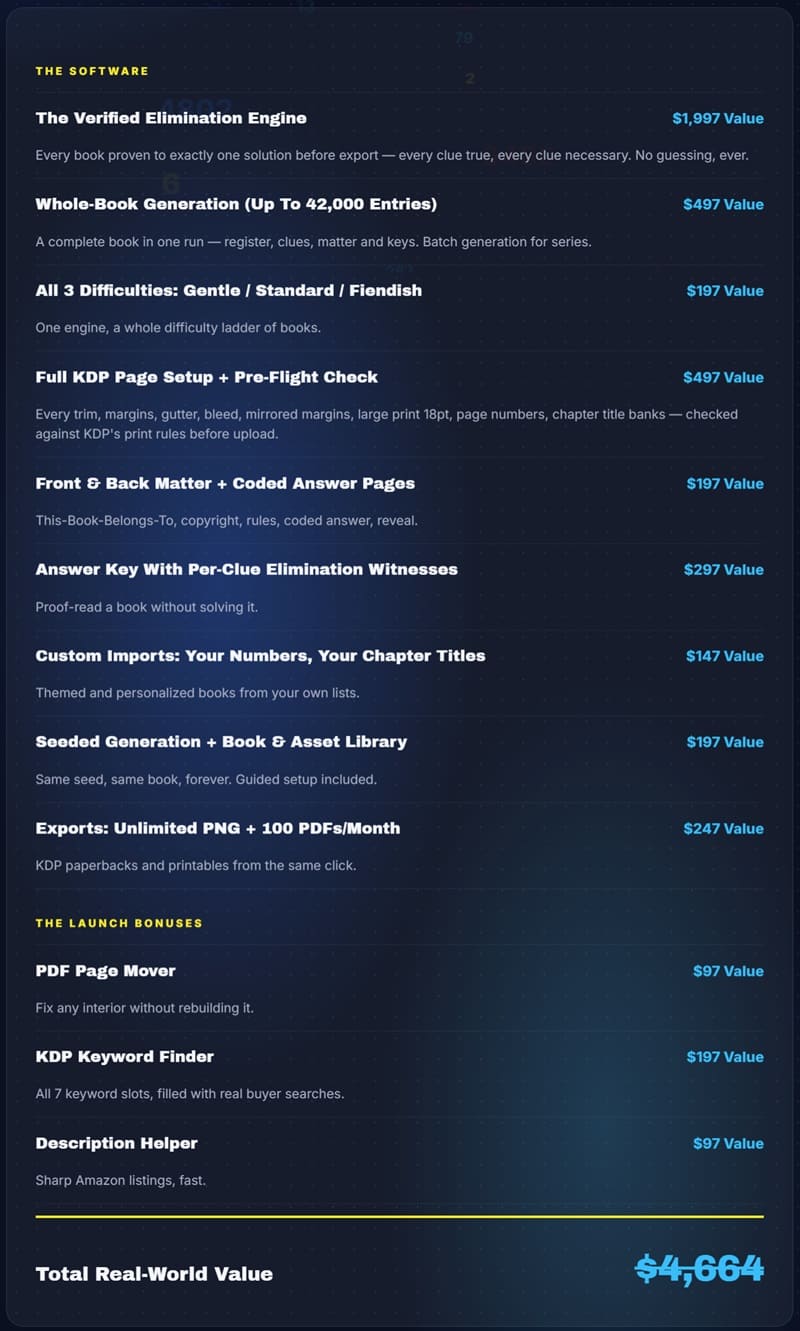
- What It Does: Builds a whole puzzle book in one run — a register of numbers, the clue chain that eliminates all but one of them, the coded answer key, and the full front and back matter — then proves the case has exactly one solution before it lets you export
- Format: Cloud software, nothing to install, no AI subscription sitting underneath it
- Front-End Price: $19 one-time 👉 Amazing Discounted Price Right Here! 📌
- Upsells: Three, at $57, $187 and $47 — none of them recurring
- Launched: Wednesday 23 September 2026 on WarriorPlus, with the launch window closing 26 September
What Is Jikan Nazo? How Does It Work Step By Step?
Jikan Nazo is cloud software that generates complete elimination-mystery puzzle books for Amazon KDP and printable marketplaces. You pick a difficulty, a register size and a trim size, and it builds the register of numbers, writes the clue chain, proves the case resolves to exactly one entry, lays the pages out to KDP’s print requirements, and produces the answer key and the front and back matter. What comes out is a book.
The word that does the work here is register. A register is the list of candidate numbers the reader is hunting through, printed across however many pages it takes — my 28,500-entry build ran to 159 register pages. One entry in that list is the answer and every clue in the case is true of it.
The engine’s rule for itself is the interesting part: remove any single clue and the case has to re-open with more than one survivor. That is what stops filler clues getting in, and it is why the answer key can be trusted.
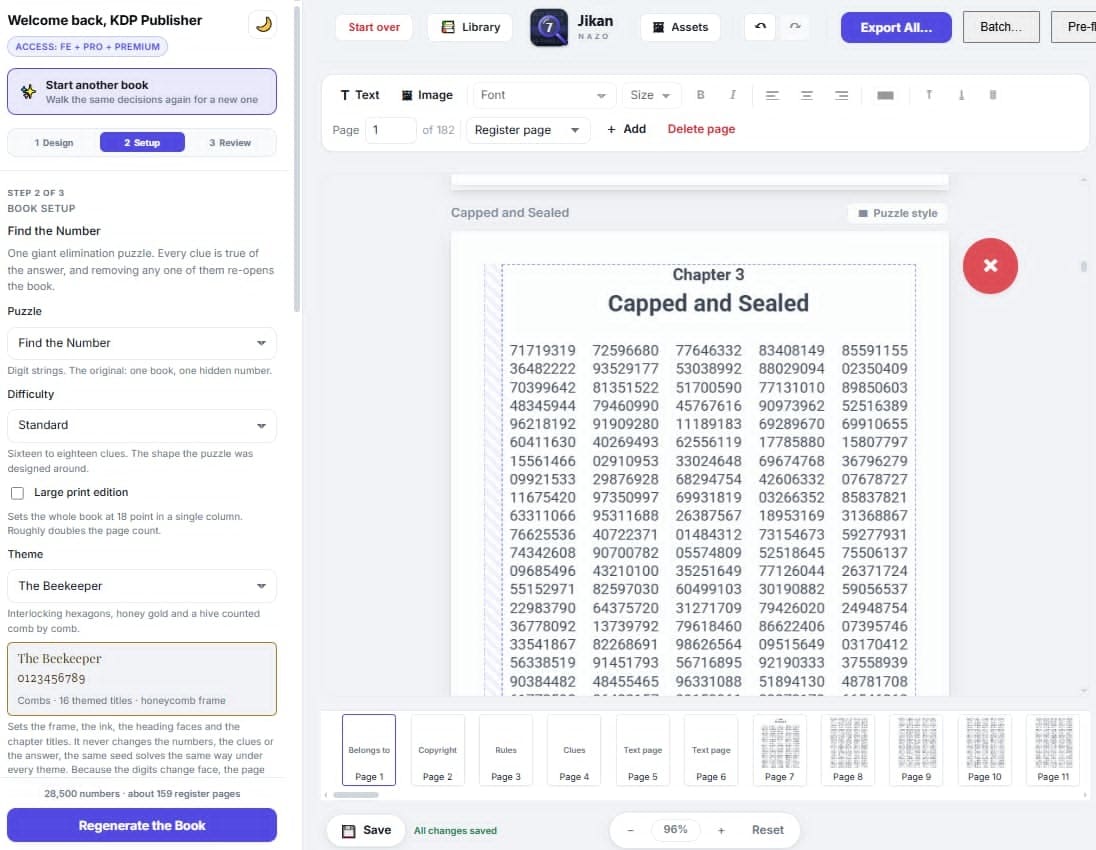
Here is the workflow exactly as I ran it:
➤ Step 1 — Choose your difficulty. Three are included: Gentle, Standard and Fiendish. They are not cosmetic labels. Gentle gives fewer clues that each cross off a large slice of the register, so the list collapses fast. Fiendish gives more clues that each eliminate less, so the register shrinks slowly and the last handful of numbers genuinely fight back. I built one volume at each setting before deciding what to publish.
➤ Step 2 — Set the register size and the trim. This is where you decide whether you are making a slim gift book or a doorstop. Every KDP trim size is in there, and large print at 18pt is a switch rather than a separate build. Margins, gutter, bleed and mirrored margins are handled for you, which is the part I would otherwise be fixing by hand in Affinity at eleven at night.
➤ Step 3 — Import your own numbers and chapter titles, if you want them. You can let it generate the register, or feed it your own number list and your own chapter titles. This is the difference between a generic book and a themed one, and it is the feature I used most: a book of locker numbers reads differently from a book of raw digits even when the underlying logic is identical.
➤ Step 4 — Generate the whole book in one run. You press build and it constructs and verifies the entire volume, not one case at a time. Up to 42,000 entries is the headline figure on the offer; what I had unlocked at this level was a register topping out at 28,500, which was already more than any book I would realistically publish. Batch mode builds several volumes in a row, which is how you get a series rather than a single title.
➤ Step 5 — Run the pre-flight check, then export. Before it hands you files it tests the book against KDP’s print requirements, which caught a spine-width problem for me on a page count I had guessed at. Exports are unlimited high-resolution PNG plus 100 print-ready PDFs a month at this level.
➤ Step 6 — Upload and list. Paperback to KDP, or the same files sold as digital printables. Amazon prints, ships and pays, and the royalty is yours. Nothing about this step is automated by the software, and I will come back to that in the pricing section.
About The Creator

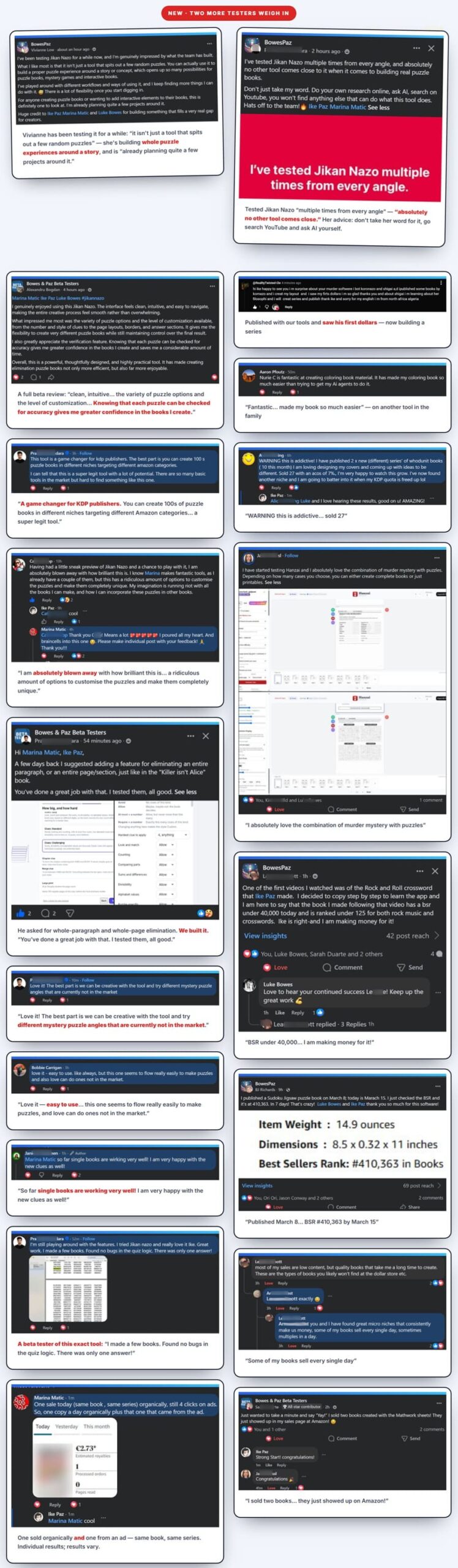
Jikan Nazo comes from Ike Paz and Luke Bowes, working under the Royalty Prints banner, with Marina Matic credited as the engine’s creator. If you publish on KDP you have probably run into their names already. Walking back through the releases: Kuro Nazo, the find-the-killer mystery book builder, plus Techo Royalty, Sansuu Royalty, Manaka Royalty, Ohanashi AI Gen, Crispy Stix, Nurie Creator, Kawaii Town Prints and Brain Game Prints. Every one of them is a tool for producing a specific kind of printable book, and none of them wandered off into being a general-purpose AI platform.
Jikan Nazo Review – Key Features
✅ A verified elimination engine, not a clue generator. Every clue is true of the answer, and the build is proven before export: apply all the clues and exactly one entry survives. The test that matters is the inverse one — pull any single clue out and the case must re-open. That is what keeps decorative, do-nothing clues from padding the page, and it is the difference between a puzzle book and a pile of numbers.
✅ Whole books in one run, with batch mode for series. You are not assembling a book case by case. One build produces the complete volume, and batch generation produces several volumes back to back. For anyone publishing a numbered series, this is the feature that changes the shape of your week.
✅ Gentle, Standard and Fiendish, all included. The difficulty changes clue density and how much each clue eliminates, which means the same register can become a coffee-break book or something a puzzle club will argue over. Three difficulties also means three sellable editions from one idea.
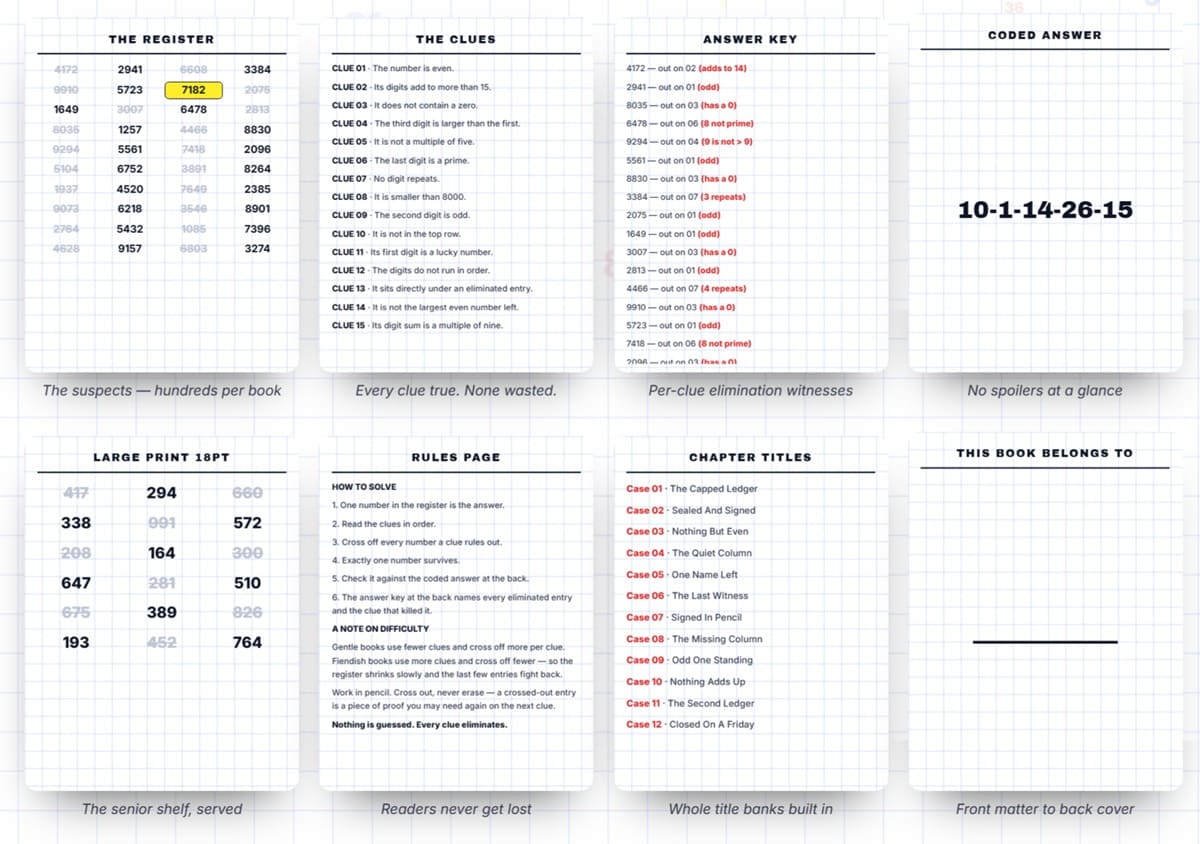
✅ Coded answer keys with per-clue elimination witnesses. For every clue, the key names an entry that only that clue rules out. It sounds like a technicality and it is the single most useful thing in the product: it lets you proof-read a forty-case book without solving forty cases, and it lets a reader who got stuck see exactly which clue they misread.
✅ Every KDP trim size, with 18pt large print built in. Margins, gutter, bleed and mirrored margins are calculated for you, and the large-print edition is a setting rather than a rebuild. Large print is not a niche in this category — for elimination puzzles it is close to the main market.
✅ A pre-flight check against KDP’s requirements. It tests the book before you upload instead of letting Amazon’s reviewer do it two days later. Anyone who has had a title bounced for a bleed error will understand why I list this as a feature rather than a nicety.
✅ Complete front and back matter. A This-Book-Belongs-To page, copyright page, rules pages that actually explain the mechanic to a first-time solver, a coded answer page and a plain reveal page. The rules pages matter more than they look: this puzzle type is unfamiliar enough that a buyer needs the first page to teach it in twenty seconds.
✅ Custom imports for your own numbers and chapter titles. Bring your own number list — house numbers, jersey numbers, catalogue codes — and your own chapter titles, and the theme carries through the whole book. This is the route to a book that looks like it was written for a specific buyer rather than generated.
✅ Seeded generation and a book library. Same seed, same book, rebuilt exactly. That means a corrected reprint is a genuine reprint and not a slightly different book, which is the kind of thing you only appreciate after you have had to fix a typo in a live title. Book and asset libraries keep the whole catalogue in one place.
✅ Flexible exports. Unlimited high-resolution PNG for listing images, mockups and printable bundles, plus 100 print-ready PDFs a month for the books themselves. The PNG side being uncapped is what makes the printables route practical at this price.
👉 Get Jikan Nazo At An Exclusively Discounted Price 📌
Exclusive Vendor & Reader Bonuses
Four bonuses come attached to the front end during the launch window. Most bonus stacks are padding, so here is which of these I have actually opened since buying.
- 🎁 PDF Page Mover (valued at $97). Reorders, inserts and deletes pages inside a finished PDF interior. I used it the same afternoon, moving a rules page that read better after the first case instead of before it. Small tool, constant use.
- 🎁 KDP Keyword Finder (valued at $197). Surfaces the search terms buyers use, so you can fill all seven keyword slots with something other than guesses. This is the bonus that does the most for a book that is otherwise invisible, because nobody is browsing for find-the-number books by name yet.
- 🎁 Description Helper (valued at $97). Drafts the Amazon listing description. It gets you a serviceable first pass; I rewrote the opening two lines of mine, which is roughly what I expect from any description tool.
- 🎁 Mekuri, the flip-book video generator. Turns a PDF into a page-turning video. For a puzzle book this is genuinely useful rather than decorative — a fifteen-second flip-through showing the register pages and the answer key explains the format to a browsing buyer faster than any description can.
DEMO VIDEO
Jikan Nazo Pricing & Funnel Summary
Jikan Nazo Front End ($19)
The front end is $19 as a one-time payment during the launch window, processed through WarriorPlus. There is no subscription behind it, no credit system, no API key to connect and no monthly fee attached to this offer — I checked that before buying, because a cloud tool at nineteen dollars usually means a bill arriving later. The price climbs as the launch timer resets, and the window closes on 26 September.
A single elimination-logic book built by hand means either writing and verifying the clue chain yourself — which is where most people quietly abandon the project — or paying someone who can. A puzzle constructor who will guarantee a single verified solution is not a twenty-dollar hire, and the formatting and answer-key work sits on top of that. Against one commissioned book, $19 for unlimited builds is not a close call.
💡 Value-for-Money Rating: 9.8/10
For a KDP publisher who already has a cover workflow and a way of getting seen — the verification alone is worth more than the asking price, and nineteen dollars buys a format most catalogues do not carry yet.
The Upsells:
➡️ OTO 1 — Jikan Nazo PRO ($57): Adds nine more register types, which is the upgrade that changes what the books look like rather than how many you can make. Instead of plain numbers you are hunting through phone numbers, timestamps, lottery tickets, IP addresses and similar. It also removes the export cap entirely, adds PPTX and DOCX output alongside PDF, adds a print-format picker and brings the interface into seven languages.
➡️ OTO 2 — Jikan Nazo PREMIUM ($187): Story registers — dates, coordinates, coded names, colours, addresses and card hands — so the register itself carries a narrative instead of digits. It adds The Casebook printed pages, SVG export for print-on-demand, and everything in Pro. This is the volume publisher’s tier; at $187 it only makes sense if you are building a catalogue rather than a book.
➡️ OTO 3 — Icon Nazo ($47): A second engine rather than an upgrade to the first. It builds the same verified elimination puzzles out of icons instead of numbers, which opens up children’s books and gift books where a page of digits would not sell. All export formats included.
Why Should You Choose Jikan Nazo?
My Personal Experience With Jikan Nazo
The project I built is “The Nightwatch Ledger” — a large-print find-the-number series aimed squarely at older solvers, the same buyer who keeps large-print word search in the bestseller lists. The framing is that each case is a page from a night porter’s logbook: a list of room numbers, locker numbers or ledger entries, and a handful of observations that narrow it to one. I used the custom import for the registers so the numbers read like something from a real building, and wrote my own chapter titles.
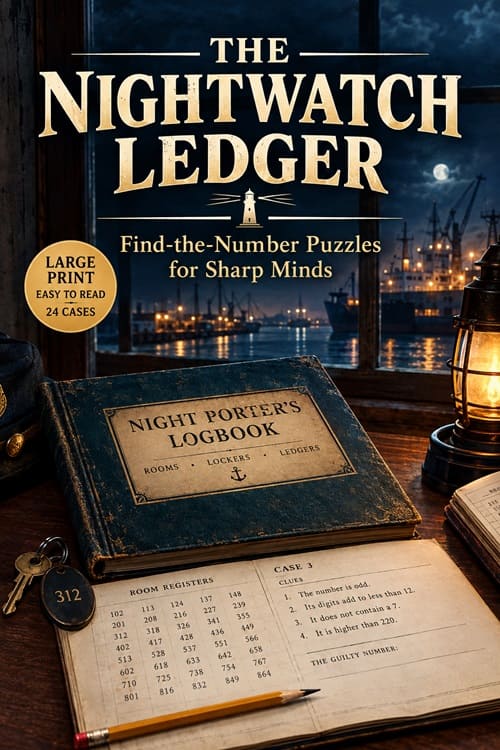
Volume one came out at 118 pages, 8.5 x 11, 18pt throughout, with 24 cases running from Gentle at the front to Fiendish at the back. Here is how the book is laid out:
- Cases 1–6 — The Quiet Floor: Gentle difficulty, registers of 180 to 400 room numbers, four to five clues each. These teach the mechanic. Case 3’s chain is “the number is odd”, “its digits add to less than 12”, “it does not contain a 7”, “it is higher than 220” — four lines, one survivor, and a first-time solver gets there in about six minutes.
- Cases 7–14 — The Service Corridor: Standard difficulty, registers of 900 to 2,400 locker numbers spread across two to four pages each, seven to nine clues. This is where the crossing-off becomes a physical activity and the pencil starts to matter.
- Cases 15–20 — The Long Night: Fiendish, registers of 3,000 to 6,500 entries, twelve to fifteen clues each, with the last three clues eliminating only a handful apiece. Case 18 still had eleven candidates alive going into its final clue, which is exactly the feeling I wanted at that point in the book.
- Cases 21–24 — The Ledger Itself: Four longer cases built on an imported list of invoice numbers, all Fiendish, each running across six register pages. These are the ones I would point a reviewer at.
- The Night Porter’s Key: The coded answer section, one page per case, each listing the guilty number plus the per-clue witness — an entry that only that clue eliminates. This is what let me proof the whole book in about forty minutes instead of solving 24 cases.
- Front and back matter: This-Book-Belongs-To page, a one-page How To Solve These with a worked five-number example, copyright page, and a plain reveal page at the very back for anyone who gives up.
The whole build took about three and a half hours across a Saturday, and most of that was mine rather than the software’s. The engine produced the 24 verified cases and the key in a single run; I spent my time on chapter titles, on the worked example in the How To Solve page, which I rewrote three times before it read clearly, and on the cover, which the software does not touch at all. I also reordered two cases after printing a proof, because Gentle case 5 was harder in practice than Standard case 7, and no engine is going to tell you how a puzzle feels.
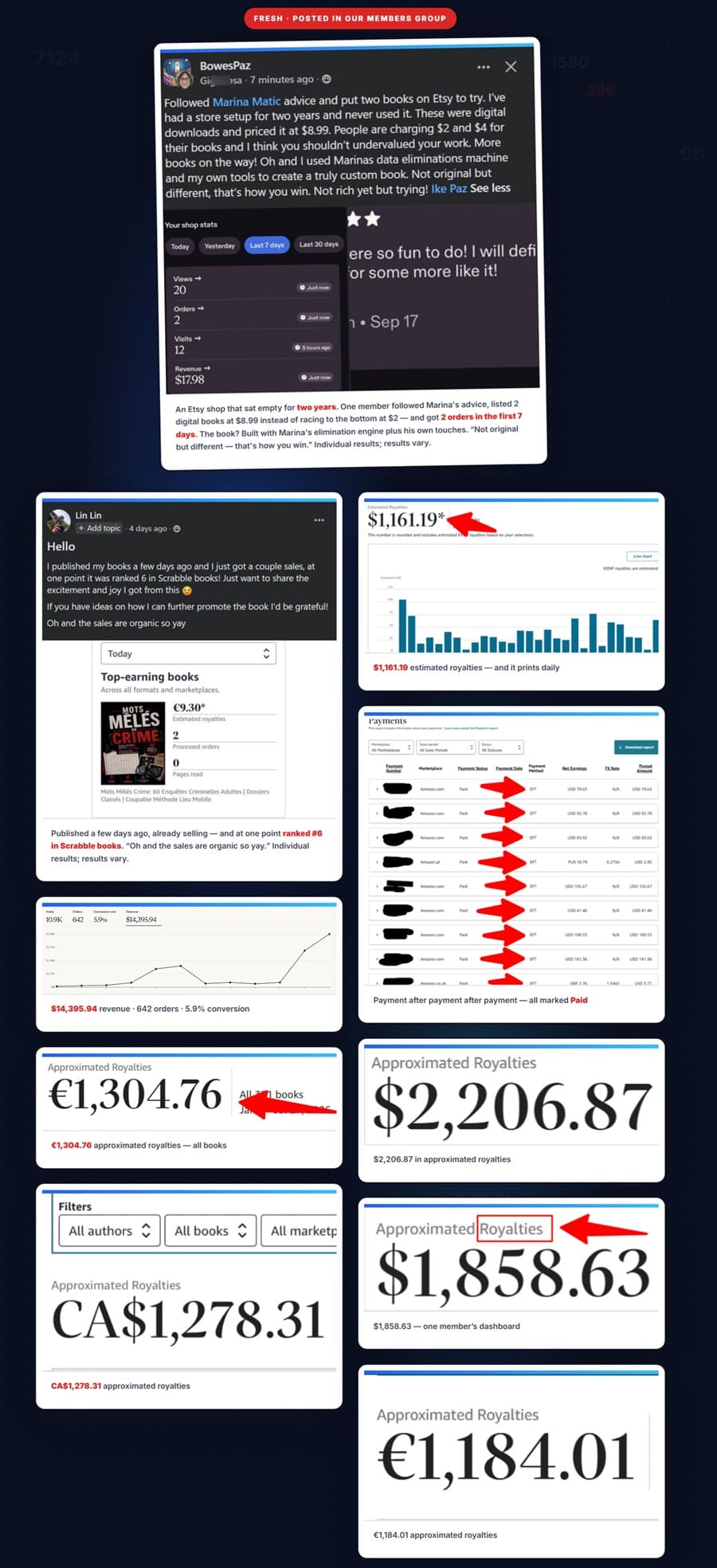
I listed the paperback on KDP on the following Tuesday and put the same interior up as a printable bundle. In the first three weeks I have had 38 paperback sales and around $108 in royalties, plus 22 printable downloads at $4 each. That is not a business yet, and I would not pretend otherwise for a book that is three weeks old with no advertising behind it. What it does tell me is that the format sells to strangers who were not looking for it specifically, which is the only question I had going in. Volume two is built and waiting on a cover.
Final Verdict
Jikan Nazo does one narrow job and does it properly. It builds elimination puzzle books that hold up when a reader takes a pencil to them, it finishes the book rather than the puzzles, and at $19 one-time it costs less than a single commissioned puzzle. In my opinion it is worth considering while the launch price is still available, particularly if you already publish on KDP and are looking for a format that is not yet three thousand titles deep. Personally, I’ll keep publishing “The Nightwatch Ledger” through it and see how far the series goes.
That’s all what I want to share with you about Jikan Nazo. I hope that my review can give you a helping hand in deciding what is best for you.
To your success,
You can receive exclusive bonus materials by completing the two steps below:
♦ Step 1: Order the product by clicking the button below.

♦ Step 2: After your purchase is complete, email your receipt to me at ethanbonus1992@gmail.com so I can confirm your purchase and send you instructions on how to access your bonus materials.